A pane of glass seems simple from the driver’s seat. It isn’t. The windshield is a structural member, a sensor platform, a weather seal, a safety device, and a visibility system that has to tolerate heat, cold, torsion, gravel, and human error. I have seen owners treat it like a disposable accessory, and I have seen the long bills that follow. When people ask why a professional Auto Glass Replacement often costs less over the life of the vehicle than a bargain job, I think of the hidden economics that most drivers never see: adhesives that fail too soon, Advanced Driver Assistance Systems (ADAS) that misread the world by a few degrees, water that migrates into wiring, and insurance claims that go sour when documentation is missing. The glass itself is rarely the most expensive part of a bad decision.
This is a story about how money leaves your wallet slowly, through minor compromises, and how a proper windshield replacement stops those leaks before they spread.
The quiet engineering inside your windshield
Older cars had simple windshields. Two pieces of glass with a plastic interlayer, set in a rubber gasket. Modern Auto Glass is an engineered laminate, tuned for optical clarity, acoustic damping, UV filtration, and sensor compatibility. Many windshields carry rain sensors, lane cameras, heads-up display (HUD) coatings, solar control layers, and antennas. The glass curve, the frit band, the thickness, even the IR-reflective tint, all support systems downstream.
Two costs live here. One is obvious, the price of the glass. The other is hidden, the cost of making those vehicle systems behave properly after installation. That is where professional Windshield Repair and replacement teams earn their keep. They understand when a chip can be stabilized with resin and when a crack near the edge compromises structure. They also understand how a seemingly tiny misalignment throws ADAS calibration off by enough to make the camera see a lane line where none exists. If a lane keep system tugs your steering because the camera sits half a degree off, you’ll pay for that mistake in tire wear, in driver fatigue, and, possibly, in a claim the insurer questions later.
Safety is an economic decision, even if it doesn’t feel like one
When a windshield is bonded correctly, it carries up to 30 percent of a vehicle’s torsional rigidity in many models. During a rollover, it helps keep the roof from collapsing. In a frontal collision, it gives the passenger airbag something to rebound against. If the bonding fails, airbag deployment can push the glass out, leaving the bag to inflate into thin air. I have reviewed accident tear-downs where the adhesive bead never cross-linked properly because the wrong urethane was applied in rainy conditions, or because the pinch weld was contaminated with oil. The outcome is not only dangerous, it is expensive. Vehicle repairs escalate, insurance claims become complicated, and you could be dealing with injuries that turn a cheap windshield into the most expensive bargain of your life.
A professional Auto Glass Replacement is not just new glass. It is surface preparation, primer choice, bead geometry, adhesive chemistry, and cure-time discipline. Technicians track humidity and temperature, they obey safe drive-away times, and they document the process. That documentation matters when you trade the car or when a claim adjuster asks for calibration records.
The false economy of “good enough”
I once inspected a sedan that had a “deal” windshield installed at a pop-up lot behind a tire shop. It looked tidy. The owner loved the price. Two months later, a heavy storm revealed a faint drip at the top corner, just slow enough that the owner ignored it. Water found the A-pillar harness and crept into the body control module. By the time the dash lit up like a holiday display, corrosion had bloomed across pins and sockets. The repair ticket could have bought three premium windshields. The installer had used a generic urethane, skipped primer on a scratched pinch weld, and sent the driver off within an hour without checking for leaks. That is the economics of “good enough.”
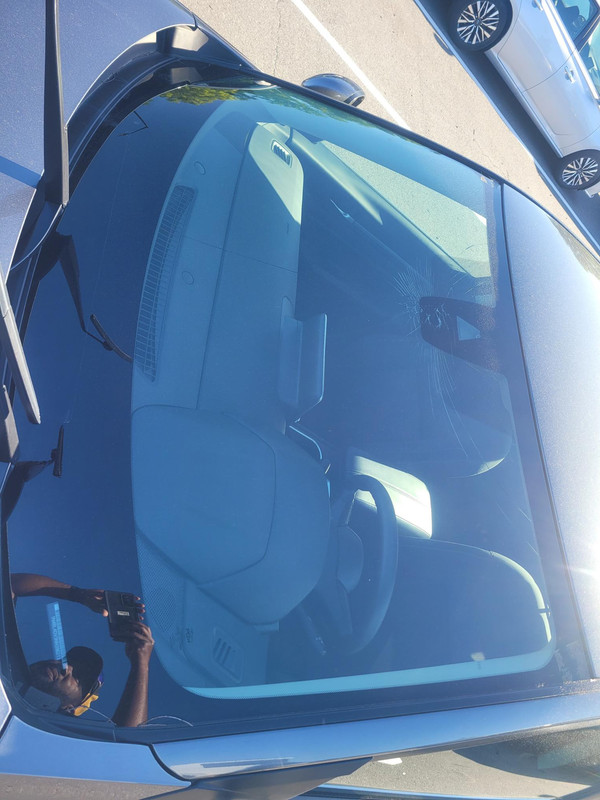
A proper shop would have measured the opening, repaired paint nicks on the pinch weld to prevent rust, used manufacturer-specified urethane with the right modulus and cure profile, and leak-tested before release. For vehicles equipped with cameras or radar behind the Windshield, they would have performed static and dynamic calibration, then stored the results. These steps do not add fluff, they Gaffney windshield replacement subtract downside risk.
Repair versus replacement, and the line between them
Drivers ask where the dividing line sits between Windshield Repair and replacement. It’s not purely size. A bullseye the size of a dime in the driver’s line of sight often qualifies for replacement because even a perfect repair can leave an optical artifact that refracts sunlight into a flare. On the other hand, a star break the size of a quarter near the perimeter may be repairable, yet here’s the catch: edge damage elevates stress and can propagate under temperature swings. I tell clients to weigh three variables: location, depth, and contamination. If a crack has penetrated the inner layer or the pit has been dirty for weeks, resin may not bond cleanly. That repair may look fine today and sprout a stress crack next winter. Paying once for replacement can be cheaper than paying twice for repair plus replacement.
Good repair technicians are conservative about what they promise. They will explain that a resin fill restores structural integrity but not invisibility, and they will warn you about the slight risk of the crack spreading during the repair process. This candor saves misunderstandings and returns.
ADAS calibration is not an upsell, it is a necessity
Vehicles with lane keep, adaptive cruise, collision warning, parking assist, or auto high-beam typically rely on cameras and sensors mounted high on or near the Windshield. When the glass changes, the focal plane and relative position changes. Even the curvature and dot matrix pattern near the sensor mount matter for glare and image processing.
Calibration is split into static procedures done in a controlled bay with targets or mirrors, and dynamic procedures that require driving under specific conditions. Some vehicles need both. The equipment outlay for a professional shop runs into the tens of thousands, plus ongoing software access and training. That investment shows up in the invoice, but it prevents costly misbehavior on the road. Misaligned ADAS can trigger false braking or miss a real hazard. I have seen vehicles come in with forward radar mounted slightly off because a low-cost glass carried a bracket that was welded a few millimeters out of spec. The driver complained of phantom alerts. The fix required replacing the glass again and re-calibrating, which consumed a day and a second set of moldings. That is not a saving.
Insurance, deductibles, and how professionals navigate them
Most comprehensive policies cover Auto Glass with a separate deductible, sometimes even zero deductible for Windshield Repair. A good shop knows the carriers, the claim portals, the documentation requirements, and the difference between aftermarket and OE-equivalent parts in the eyes of each insurer. They will tell you when repair preserves your claim history and when replacement triggers a higher out-of-pocket expense. They will also use pricing structures that avoid surprises, including moldings, clips, and recalibration fees.
I have watched do-it-yourselfers buy discount glass online, only to find that the molding kit adds two days and another shipping charge, and the necessary adhesive is hazardous-materials rated with its own fee. By the time they search for a mobile calibrator or schedule a dealer visit to reset the camera, the invoice exceeds a single-stop professional job. Insurance doesn’t reimburse well for piecemeal, uncoordinated work. It prefers a consolidated claim with one warranty.
Optical clarity is not vanity, it is safety
Luxury tone or not, optics are not a matter of taste. Your eyes track over thousands of micro-movements every drive. Distortion at the perimeter, waviness around the HUD area, or a misapplied shade band changes how quickly you perceive motion. I have seen economy glass with acceptable conformity on paper produce subtle ripples that cause eye strain on long trips. A client with a performance SUV complained of headaches after a cheap windshield, not realizing his brain worked harder to resolve lines on the road. We measured the “zebra board” optical pattern and found enough deviation to justify replacement with a higher-grade pane. He paid for glass twice. He should have paid for quality once.
HUD-equipped cars need a specific laminate to prevent double imaging. Rain sensors rely on consistent refractive indexes where the gel pad meets the glass. A professional shop will ask about these features before ordering. The wrong glass may fit the opening and cost less, but it will not perform. That underperformance becomes fatigue, reduced reaction time, and small mistakes that can cause large consequences.
Adhesives and the chemistry of staying put
The strongest glass in the world fails if the bond is weak. Professional installers choose urethanes by viscosity, green strength, modulus, and cure profile, matched to environmental conditions. A summer cure in Phoenix is not the same as a coastal winter in Seattle. They clean with the right solvents, avoid silicones near the pinch weld, lay a continuous bead at the correct height to ensure proper standoff, and seat the glass without smearing the adhesive into air pockets.
Those details control wind noise, water sealing, and crash performance. cheap jobs often skip primers to save minutes or a few dollars. The result might pass a hose test today and still weep next month. Water enters under the lower corners, wicks along felt channels, and accumulates where it is least welcome. Electronic modules under the dash, corrosion at seat mounts, mold odor in the HVAC box, these are all expensive side effects. The adhesive line is invisible after installation, which is why it’s easy to neglect, and why the best shops photograph and document it.
Time as a cost variable
Professional glass work looks fast, but the clock moves in more meaningful ways than the twenty minutes you see. Consider safe drive-away time. Urethanes have cure curves based on temperature and humidity that determine when the vehicle is safe to operate, especially if airbags are present. If you drive off before the glass is secure, a minor accident can turn major. Shops that rush this step trade liability for throughput. You pay for that risk whether you notice or not.
There is also the time value of your own schedule. A shop that manages the entire chain - glass sourcing, moldings, recalibration, insurance paperwork, and warranty - saves you hours of coordination and repeat visits. That time has a cost. When your windshield crack starts small and creeps, waiting can move you from a simple repair to a full replacement that must be scheduled, calibrated, and verified. Professionals counsel you on urgency. A crack under 6 inches in a stable location might wait a week. A crack from the edge, growing toward the driver’s view, needs attention within a day or two to avoid spreading during thermal cycles.
Price, value, and where the money actually goes
There is a market for every level of quality. I have seen price spreads of 40 to 70 percent between cheapest and best. The difference usually lives in four places: the glass source, the adhesive system, the labor skill, and the calibration capability. Aftermarket glass can be excellent, especially from top-tier manufacturers that produce OE glass under different labels. It can also be inconsistent. A professional installer knows which part numbers land cleanly, which brands have consistent curvature and frit coverage, and which to avoid on certain models. The savings of a good aftermarket pane can be real, especially when paired with OE moldings, but it takes knowledge to navigate.
Labor is not just the hands-on hour. It is the years of avoiding pitfalls, the discipline to refuse a car when weather conditions make bonding unsafe, and the infrastructure to fix issues without drama. Good shops carry liability coverage, train their technicians, and back their work with warranties that have teeth. If a noise appears at highway speeds or a rain leak surfaces, they will chase it. That is value you can feel, and it tends to cost less than throwing darts at the problem with multiple vendors.
When repair is your best friend
There is a sweet spot where Windshield Repair shines: small chips caught early, especially those that haven’t collected dirt or water. A skilled technician can drill a micro-channel, inject resin under vacuum, then cure with UV to stabilize the break. The result might not disappear, but it will arrest crack growth. This service costs a fraction of replacement, often with no deductible. I have recommended repair for clients who were ready to replace, because the damage was minor and the car had no ADAS behind the affected area. The money saved is tangible, and repair preserves the factory seal - a meaningful advantage since the original bond is made under controlled conditions at the plant.
The trick is speed. If you catch a chip within days, especially before rain and road grime infiltrate, the repair holds better. Keep a small strip of clear tape over the chip until repair to prevent contamination. Professionals who offer on-site repair will bring proper resins with different viscosities for star breaks versus bullseyes, not a one-size-fits-all tube from a big-box store. The difference shows months later when temperature swings test the repair.
Climate, roads, and the life of your glass
Your driving environment affects your Auto Glass budget more than you might expect. Rural highways with gravel shoulders throw more debris. Cities with truck traffic kick up metal fragments. Mountain climates swing temperatures fast, loading stress into tiny defects. If you run winter defrost at full blast on a cold morning, a small chip can shoot a foot-long crack across the field in seconds. I keep a mental map of trouble corridors: the quarry exit ramp that sprinkles pea gravel at 7 a.m., the stretch of interstate after the bridge where expansion joints pop stones loose in spring. Professionals who work local know these patterns and advise accordingly.
Consider coatings as well. Some premium windshields carry hydrophobic layers that bead water and keep wipers efficient. They reduce scrubbing noise and extend blade life. These perks align with luxury expectations and they save small amounts that add up: fewer wiper replacements, less micro-scratching from dry wipe, better visibility in storms, which reduces accident risk by a nontrivial margin. Even if you add an aftermarket coating, a pro will prep the surface properly to avoid rainbowing or wiper chatter.
How to recognize a professional job before you pay
Before you authorize work, ask questions. The answers reveal a shop’s standards.
- What urethane brand and part number will you use, and what is the safe drive-away time for today’s temperature and humidity? Will you replace moldings and clips with OE or OE-equivalent, and how do you handle rust or paint nicks on the pinch weld? Does the job include static and dynamic ADAS calibration where applicable, and will you provide a calibration report? What glass brand are you installing, and is it HUD or sensor compatible for my trim level? What is your leak and wind noise warranty, and how will you remedy issues if they arise?
If the responses are vague or defensive, keep looking. A polished lounge and espresso machine do not calibrate a camera. A quiet, organized bay with a straight target board does.
Seasonal realities and shop discipline
Heat, cold, and moisture change the way adhesives behave. A disciplined shop will reschedule a mobile job if a surprise storm rolls in. They will erect a portable canopy or pull the car indoors to control conditions. They will wipe down the dash and vacuum glass dust, not leave it to grind into surfaces. They will test wiper arcs, reseat cowl panels without bending clips, and align the rearview mirror mount exactly where it belongs.
These small courtesies prevent rattles and squeaks that otherwise send you back for do-overs. I once traced an annoying tick at 65 mph to a cowl panel left slightly proud after a quick windshield. The shop fixed it without argument, but the owner had already spent two half-days on the matter. Good process would have saved both parties time.
When bespoke service makes sense
High-value vehicles benefit from shops that treat auto glass like bodywork. For exotics with bonded sensors, heated areas, or rare glass, I recommend two-step confirmation: the shop pre-orders the exact part, test-fits moldings, and schedules calibration equipment in advance. This orchestration avoids the all-too-common scene where a car sits with its windshield out while a part is overnighted. The hourly cost of a loaner or your time escalates quickly. With luxury cars, small shortcuts often show. An uneven frit line near an A-pillar on a coupe may bother you every drive. Spending for a specialist who has done your model dozens of times is not indulgence, it is a hedge against repeat work.
The math of total cost
Add the pieces. Start with glass and adhesive. Layer in moldings, clips, cowl seals. Add calibration time and equipment. Fold in warranty and the cost of being without the car. Subtract insurance benefits and the resale value of documented professional work. Then consider risk: leaks, noise, ADAS errors, corrosion, and safety performance. When you run this calculation honestly, professional Auto Glass Replacement usually pencils out as the cheaper option over two to five years.
Even if the upfront number is higher by a few hundred dollars, you are buying down uncertainty. You pay once for proper materials and method, and you keep the downstream expenses low. Cheap, in this context, is often deferred expensive.
A short playbook for owners who care about both quality and cost
- Address chips quickly and keep them clean so Windshield Repair remains viable and inexpensive. Choose installers who can calibrate ADAS in-house and provide printed or digital reports. Avoid splitting glass work and calibration across vendors unless you must. Ask for the exact glass brand and spec, especially for HUD, IR coatings, or sensor packages. OE-equivalent is often ideal if from a reputable maker. Respect cure times. Plan your day so the vehicle can sit until the adhesive reaches safe drive-away strength. Keep paperwork. Documented replacements and calibrations help with resale and smooth insurance conversations.
The habit that pays for itself
The best money-saving move is boring: build a relationship with a reputable glass shop. When a pebble hits and you call, they know your car, your sensors, your tastes. They can tell you if you can wait, if a repair makes sense, or if a replacement is the smarter play. That familiarity trims time, avoids wrong parts, and ensures consistency. Over multiple years, this relationship saves enough in avoided hassles and missteps to dwarf any coupon.
We live with vehicles that ask more of the humble windshield than at any time in the past. Treating Auto Glass as an engineered system rather than a commodity is not snobbery, it is prudence. Professional attention guards your safety, preserves your vehicle’s capabilities, and protects your budget from the creeping costs of small mistakes. When the day comes and the crack runs, choose the path that looks slightly more expensive on paper and watch how it quietly saves you money in the months that follow.